
A land shaped by history
The area surrounding Barumini was inhabited continuously from prehistory to the modern age. The presence of numerous smaller nuraghi, villages, giants' tombs and places of worship shows how this territory was a true strategic and cultural hub of Nuragic civilisation. Local populations used the plateau's natural resources for farming, herding and trade.
The Nuragic village and its dwellings
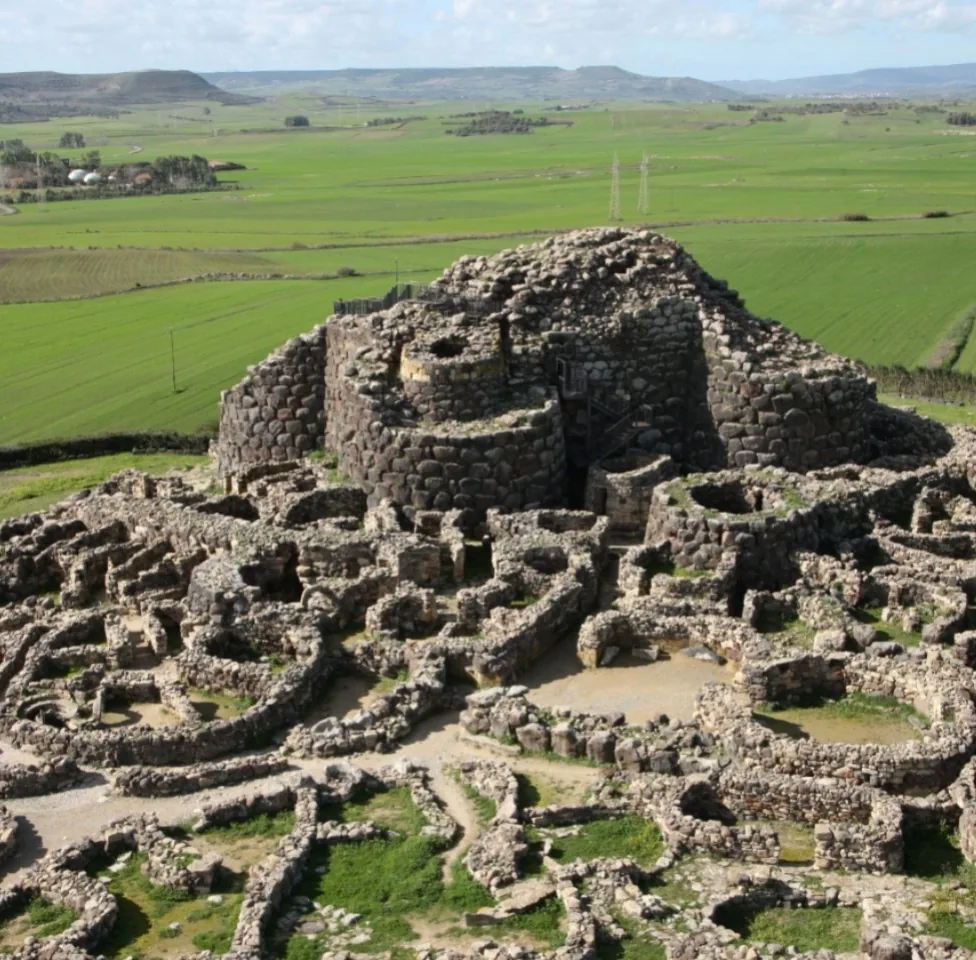
Beside the central tower of the Barumini nuraghe lies a vast Nuragic village of circular stone huts, some with complex rooms used for communal and ritual activities. This settlement helps us understand the social, economic and political organisation of Nuragic communities, offering a concrete view of daily life more than three thousand years ago.
Casa Zapata and the historical layers
A short distance from the Nuragic complex stands Casa Zapata, a 17th-century palace built directly over a Nuragic settlement. This site is an emblematic example of continuous occupation, where different eras — Nuragic, Punic, Roman and Spanish — overlap and dialogue within a single museum context.
The Giara di Gesturi: archaeology and landscape
Not far from Barumini stretches the basalt plateau of the Giara di Gesturi, known not only for its famous wild ponies but also for many nuraghi and archaeological remains set in a striking natural environment. Here archaeology and landscape merge, offering visitors a cultural and natural experience of high value.
A heritage to value
Visiting Barumini means going beyond the single monument and immersing yourself in a widespread archaeological landscape, where every stone tells a story. The areas around the nuraghe are not a mere backdrop but an integral part of a unique historical narrative that makes this territory one of the most important and fascinating in Sardinia.